

Love nasi lemak but worried about your kidney health? The good news is that having chronic kidney disease (CKD) does not automatically mean you must give up Malaysia’s favourite breakfast.
For many Malaysians, nasi lemak is more than just a meal. It is a familiar breakfast enjoyed at roadside stalls, kopitiams, mamak restaurants and family gatherings.
But if you have been diagnosed with kidney disease, you may start questioning every ingredient on your plate.
Can you eat coconut milk rice? Is sambal too salty? Should you avoid ikan bilis? What about fried chicken and eggs?
The answer is not as simple as saying nasi lemak is either good or bad for kidney patients.
Some people with kidney disease can still enjoy nasi lemak, but the portion size, ingredients and cooking methods may need to be adjusted according to their kidney function and nutritional requirements.
In this guide, Dietitian90 Consultancy breaks down a typical Malaysian nasi lemak plate and explains how to make more informed food choices when managing chronic kidney disease.

Is Nasi Lemak Bad for Your Kidneys?
Nasi lemak is not automatically harmful to everyone with kidney disease.
However, a typical serving can contain considerable amounts of sodium, saturated fat and carbohydrates, depending on its ingredients and preparation.
For people with CKD, these nutrients may require closer attention.
For example:
- Sodium: Excessive intake can contribute to high blood pressure and fluid retention.
- Carbohydrates: Portions are particularly important if you also have diabetes.
- Protein: Requirements depend on your kidney function and whether you receive dialysis.
- Potassium and phosphorus: Restrictions may be necessary for some patients, depending on blood test results.
- Saturated fat: Frequent high intake may be undesirable for cardiovascular health.
A small nasi lemak packet with a modest serving of rice, cucumber, egg and sambal is nutritionally different from a large nasi lemak meal with fried chicken, extra sambal, salted anchovies and additional gravy.
The goal is not necessarily to eliminate nasi lemak, but to understand what is on your plate.

Nasi Lemak and Kidney Disease: Breaking Down the Ingredients
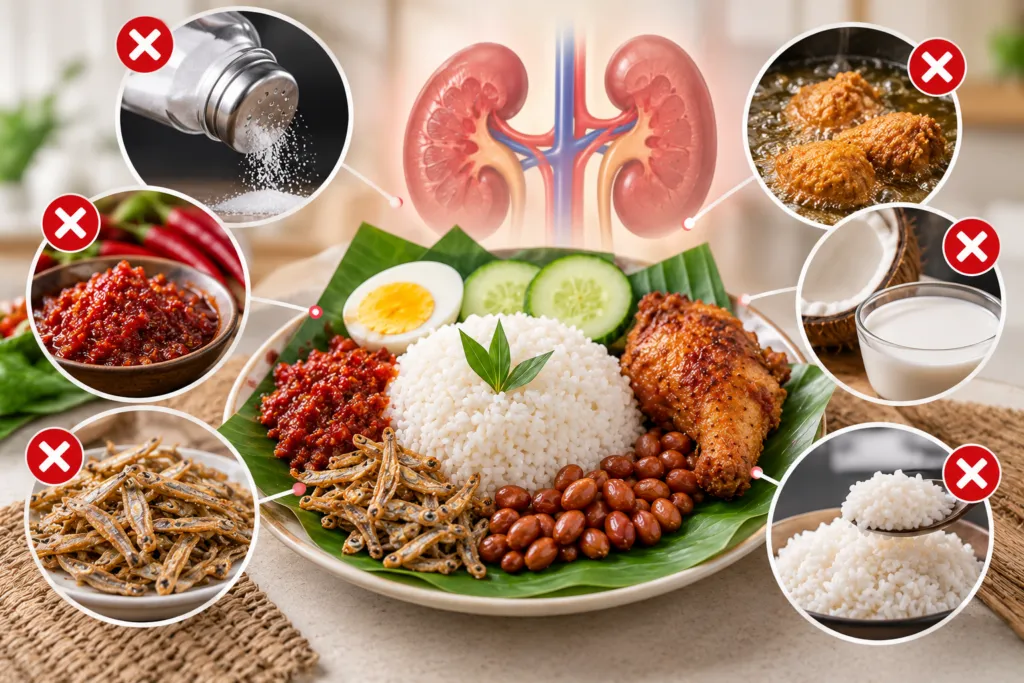
Let’s look at seven common components of nasi lemak and what kidney patients should consider.
1. Coconut Milk Rice: Can Kidney Patients Eat Nasi Lemak Rice?
The fragrant rice is the heart of nasi lemak.
Traditionally, it is cooked with coconut milk, pandan leaves and sometimes additional salt.
White rice provides carbohydrates, which supply energy. However, larger portions can increase blood glucose, especially for people managing diabetes alongside CKD.
Coconut milk contributes flavour and fat, including saturated fat.
For kidney patients, the main considerations are:
- Rice portion size
- Amount of coconut milk used
- Added salt
- Overall calorie and saturated fat intake
- Blood glucose management, if you have diabetes
Dietitian90’s Tip: You do not necessarily need to replace nasi lemak rice with brown rice. Although brown rice provides more fibre, it also contains more naturally occurring potassium and phosphorus. The most appropriate choice depends on your nutritional needs and laboratory results.
A practical adjustment: Start with a smaller rice portion rather than automatically finishing a large serving. If cooking at home, use a moderate amount of coconut milk and less added salt.
2. Sambal: Is It Too Salty for Kidney Patients?
Sambal gives nasi lemak its signature spicy flavour.
However, sambal recipes vary widely.
Common ingredients include:
- Dried chillies
- Onions
- Garlic
- Oil
- Sugar
- Salt
- Belacan or other shrimp-based ingredients
- Tamarind
The biggest concern for many kidney patients is the amount of sodium added through salt, belacan or other seasonings.
Some sambal recipes also contain considerable added sugar.
For people managing both diabetes and kidney disease, the amount of sambal matters.
A practical adjustment: Enjoy a smaller portion of sambal instead of covering the rice with several spoonfuls.
When preparing sambal at home, you can reduce added salt and sugar while maintaining flavour with chilli, onion, garlic and tamarind.
3. Ikan Bilis: Should Kidney Patients Avoid Anchovies?
Crispy ikan bilis is another familiar nasi lemak topping.
Anchovies provide protein, but dried and salted varieties can contain substantial sodium.
This is particularly relevant if you have:
- High blood pressure
- Fluid retention
- A prescribed sodium restriction
The sodium content varies according to the product and preparation.
A practical adjustment: Use a small amount of ikan bilis as a garnish rather than a large serving.
If you are preparing nasi lemak at home, choose lower-sodium ingredients where available. Rinsing dried anchovies may remove some surface salt, but it does not reliably make them low in sodium.
4. Fried Chicken: Can Kidney Patients Eat It?
Nasi lemak ayam goreng is popular throughout Malaysia.
Chicken provides protein, which is essential for maintaining muscles and supporting tissue repair.
However, protein requirements differ depending on CKD stage and treatment.
For many adults with non-dialysis CKD, excessive protein intake may be inappropriate. People receiving dialysis generally have higher protein requirements.
Fried chicken may also contain significant sodium and fat, especially when prepared with heavily seasoned flour or marinades.
A practical adjustment: Consider a smaller portion of chicken, remove excess heavily seasoned coating, or choose grilled, steamed or air-fried chicken prepared with less salt.
The appropriate amount of chicken should be based on your individual protein requirements.
5. Boiled Egg: Is It Kidney-Friendly?
A boiled egg is a common nasi lemak accompaniment.
Eggs provide high-quality protein, while the yolk contains phosphorus and other nutrients.
Does this mean kidney patients must avoid eggs?
No.
Eggs can fit into many kidney-friendly eating plans, but the amount and frequency should reflect your protein and phosphorus requirements.
For example, a person with early CKD may have different nutritional needs from someone with advanced CKD or receiving dialysis.
A practical adjustment: Consider the egg as part of your total protein intake for the meal, especially if you are also eating chicken, fish or other protein-rich dishes.
Avoid assuming that every kidney patient should eat only egg whites or eliminate yolks entirely.
6. Peanuts: Can Kidney Patients Eat Them?
Roasted peanuts add crunch and flavour to nasi lemak.
They provide unsaturated fats, plant-based protein and other nutrients.
However, peanuts also contain potassium and phosphorus, and salted peanuts contribute additional sodium.
For some people with CKD, a small portion may be suitable.
Others may need to adjust their intake depending on blood potassium, phosphorus and overall nutritional requirements.
A practical adjustment: Choose unsalted peanuts where possible and keep the portion modest.
You do not need to eliminate peanuts automatically unless your healthcare team has advised a relevant restriction.
7. Cucumber: Is It Safe for Kidney Patients?
Cucumber is one of the simplest components of nasi lemak.
It provides freshness, water and a small amount of fibre.
Compared with many other vegetables, cucumber is relatively low in potassium per typical serving.
For many people with CKD, cucumber can be a suitable accompaniment.
However, individual dietary recommendations still apply.
A practical adjustment: Keep the cucumber slices and consider adding an appropriate portion of other suitable vegetables to improve the meal’s overall balance.

How to Make Nasi Lemak More Kidney-Friendly
You don’t have to remove every ingredient to make a difference.
The following table shows practical adjustments that may help.
Nasi lemak component | What to watch | Possible adjustment |
Coconut milk rice | Carbohydrate portion, saturated fat and added salt | Smaller rice portion; less salt and moderate coconut milk |
Sambal | Sodium and added sugar | Smaller serving; less salt and sugar when homemade |
Ikan bilis | Sodium from dried or salted anchovies | Use a small amount as garnish |
Fried chicken | Protein portion, sodium and fat | Choose a suitable portion; consider grilled or air-fried preparation |
Egg | Total protein and phosphorus needs | Include according to individual requirements |
Peanuts | Sodium, potassium and phosphorus | Choose unsalted peanuts in a modest portion |
Cucumber | Usually a relatively suitable accompaniment | Keep cucumber and add suitable vegetables where appropriate |
Remember: A kidney-friendly nasi lemak meal should be tailored to the individual. The adjustments above are general ideas, not a universal renal diet prescription.
Can You Eat Nasi Lemak If You Have Both Diabetes and Kidney Disease?
Yes, nasi lemak may still fit into an individualised eating plan, but managing both conditions requires additional consideration.
When diabetes and CKD occur together, your diet needs to support blood glucose management while accounting for kidney-related nutritional requirements.
For example, a large serving of nasi lemak rice may contribute a substantial carbohydrate load.
Adding sweetened teh tarik or kopi susu increases the total carbohydrate intake further.
Meanwhile, salty sambal, ikan bilis and heavily seasoned chicken may contribute excessive sodium.
A More Balanced Approach
Consider these adjustments:
- Choose a rice portion appropriate for your carbohydrate needs.
- Include a suitable portion of protein.
- Reduce excessive sambal, gravy and salty toppings.
- Keep cucumber or other appropriate vegetables.
- Choose water or an unsweetened beverage, unless you have specific fluid restrictions.
- Consider the entire day’s food intake rather than focusing on one meal.
If you use insulin or medications that can cause low blood glucose, avoid making major carbohydrate changes without considering your treatment plan.
Dietitian90’s Tip: Managing diabetes and CKD is not simply about eating less sugar and less salt. Protein, potassium, phosphorus, energy and fluid requirements may also need to be considered.
Homemade vs Hawker Nasi Lemak: Which Is Better?
Homemade nasi lemak offers greater control over ingredients.
You can decide how much coconut milk, salt, sugar and cooking oil to use.
You can also choose how the chicken is prepared and how much sambal is served.
However, homemade food is not automatically kidney-friendly.
A homemade nasi lemak prepared with generous amounts of salt, stock powder and coconut milk may still be unsuitable for someone with specific dietary restrictions.
When Eating Nasi Lemak Outside
Try these practical strategies:
- Choose a smaller portion of rice.
- Request less sambal if possible.
- Avoid adding extra salty sauces or gravy.
- Consider whether you need both fried chicken and egg in the same meal.
- Choose unsweetened drinks.
- Be mindful of other salty foods consumed throughout the day.
These changes may help you continue enjoying familiar Malaysian meals while making more informed dietary choices.
5 Common Mistakes Kidney Patients Make When Eating Nasi Lemak
Mistake 1: Assuming Nasi Lemak Is Completely Forbidden
CKD does not automatically require the elimination of every familiar Malaysian dish.
Mistake 2: Focusing Only on the Rice
The sodium from sambal, ikan bilis, seasonings and other toppings may be equally important.
Mistake 3: Removing All Protein
Protein is essential for health. The goal is to consume an appropriate amount, not eliminate it.
Mistake 4: Assuming Every Vegetable or Nut Is Unsafe
Potassium and phosphorus restrictions should be guided by your blood results and medical advice.
Mistake 5: Following Someone Else’s Kidney Diet
Two people with CKD may have different nutritional requirements even if they enjoy the same foods.
Final Takeaway: You Don’t Necessarily Have to Give Up Nasi Lemak
So, can kidney patients eat nasi lemak?
For many people, the answer is yes, with appropriate adjustments.
Rather than labelling nasi lemak as a forbidden food, focus on understanding the individual components of the meal.
Pay attention to rice portions, sodium-rich sambal and ikan bilis, the amount of protein, and the cooking methods used.
Most importantly, remember that your nutritional needs depend on your kidney condition.
A kidney-friendly diet should help you manage your health without creating unnecessary fear around food.
Need Help Managing Your Kidney Diet?
If you have chronic kidney disease, diabetes or both, knowing what to eat can feel overwhelming.
At Dietitian90 Consultancy, personalised nutrition counselling can help you understand your dietary requirements and make more confident choices when eating Malaysian food.
Book a Personalised Nutrition Consultation with Dietitian90 Consultancy and learn how to adapt your everyday meals to your individual health needs.